Why Mammoth Cave's Visitor Boom Isn't Showing Up in Cabin Rental Income
August 20, 2026
August 20, 2026
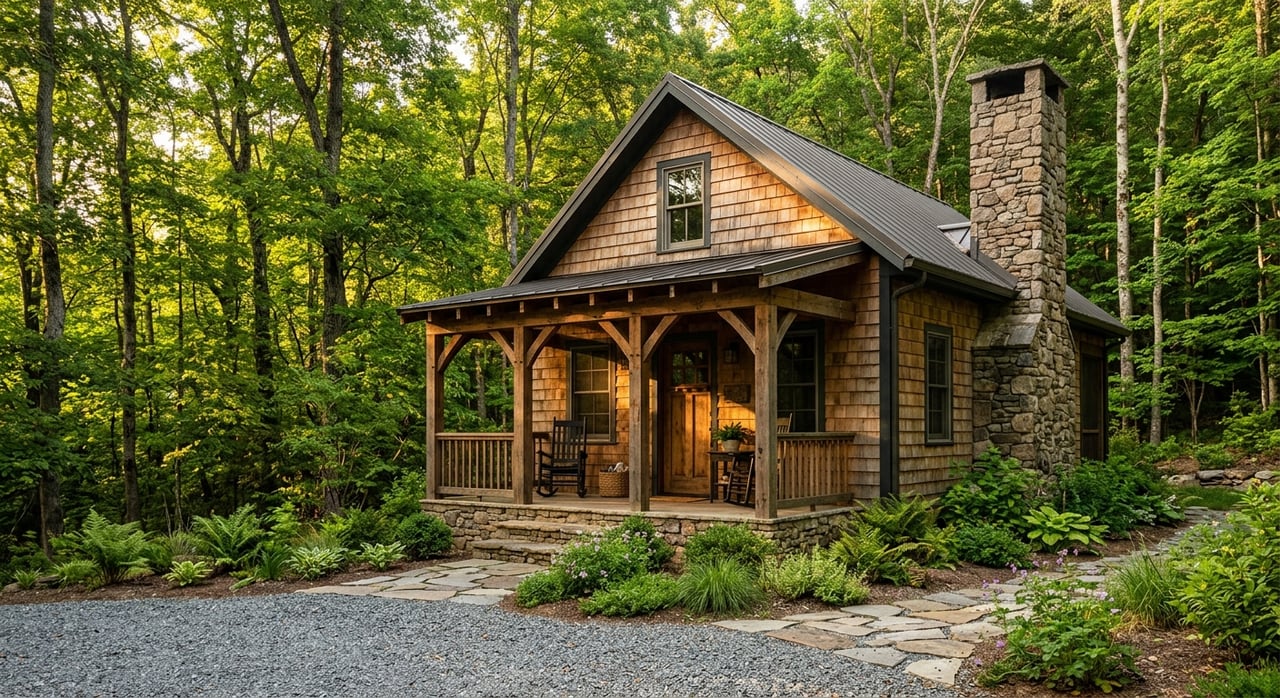
A buyer looking at a wooded lot near Nolin Lake this year has probably heard the same pitch twice: park visitation is climbing, international travelers are discovering Mammoth Cave in bigger numbers, and a cabin here practically pays for itself. The first two claims hold up. The third one does not, at least not the way most buyers assume.
The National Park Service counted 660,734 recreation visits to Mammoth Cave National Park in 2025, and travel-industry writeups earlier this year pointed to another double-digit jump in 2026 visitation, with new interest coming from Canadian, British, German, Mexican, and Australian travelers. That is the headline. The numbers hosts actually collect on their properties tell a different story, and it is the story a buyer running rental-income math needs to see before they write an offer.
AirDNA tracks short-term rental performance by market, refreshed monthly, with data through June 2026. For the Mammoth Cave area, the year-over-year picture looks like this:
| Metric | Change, June 2025 to June 2026 |
|---|---|
| Average daily rate | Down 15.0%, now $219 a night |
| Revenue per listing | Down 3.1%, now $26.7K a year |
| Occupancy | Down 0.1%, holding near 48% |
| RevPAR | Down 2.7%, now $107 |
| Active listings | Down 8.9%, now 82 listings |
Occupancy barely moved. That means guests are still showing up at roughly the same rate they did a year ago. What changed is what hosts can charge them. A 15% drop in average daily rate, paired with fewer competing listings, is not what you would expect if rising visitation were translating directly into stronger lodging demand. Normally, when supply shrinks and demand holds steady, the hosts who remain gain some pricing room. Here, the opposite happened. Rates fell anyway.
The likely explanation is that a wave of cabins and cottages came onto the market over the past few years, priced ambitiously on the assumption that Mammoth Cave's growing visitor count would support premium nightly rates across the board. Guests did not cooperate at that pace, some of those listings dropped off the platforms, and the ones that stayed had to cut rates to keep booking calendars filled. The visitation growth is real. It just is not flowing into private lodging revenue the way the marketing copy implies.
Part of why that disconnect exists shows up in how the Park Service itself counts visitors. Of the 660,734 recreation visits logged in 2025, only about 84,660 were overnight stays, and that figure covers only the park's own campgrounds and lodge, not the hundreds of private cabins ringing the boundary. Most people who visit Mammoth Cave are day-trippers. They book a cave tour, maybe walk a surface trail, and drive home or continue to another stop on a longer Kentucky itinerary.
That matters for anyone underwriting a purchase around rental income. A rising visitor count at the park gate is not the same thing as a rising number of people who need a bed for the night in Edmonson County. Some of that overnight demand goes to campgrounds inside the park. Some of it goes to hotels in Cave City or Bowling Green. Only a slice of it ever reaches a private cabin near Nolin Lake, and AirDNA's numbers suggest that slice softened this year even as the gate count grew.
None of this means the math is bad. AirDNA's own Market Score for the area is 76 out of 100, and the subscore for investability, which weighs local home prices against what short-term rentals actually earn, comes in at a perfect 100. Real estate here is inexpensive relative to what a rented cabin can produce, even at a softened rate. The mistake is building a purchase around rate growth that headline visitation stats seem to promise but the host-side data does not support.
A more honest way to model a purchase near Mammoth Cave for partial rental income:
Properties currently on the market near the park reflect that lifestyle-first pattern already. Several listings lean on private ponds, a private lake, on-site disc golf, or acreage as the draw rather than promising a guaranteed nightly rate, which lines up with what the data shows: the buyers doing best here are the ones who wanted the land and the setting regardless of what a booking calendar produces.
Kentucky has no statewide short-term rental law. Several bills have been introduced in recent legislative sessions to create one, and none had passed as of this writing, according to the Kentucky Legislative Research Commission's bill tracking. That leaves regulation entirely up to individual cities and counties, and the rules vary sharply within a short drive of each other. Bowling Green restricts short-term rentals from operating in single-family residential zones unless licensed as a bed and breakfast. Louisville requires registration with its planning office and its revenue commission. Lexington requires a separate short-term rental dwelling permit with an inspection. Boone County requires its own permit through the county's occupational license office.
In the course of researching this piece, no standalone short-term rental ordinance turned up for Edmonson County the way one exists in those neighboring jurisdictions. That is not the same as saying no rules apply. It means a buyer should not assume the absence of a well-publicized ordinance equals a green light. Zoning classifications, any deed restrictions on the specific parcel, and county planning department guidance still govern what a property can legally be used for, and those details can change. Anyone planning to rent a property short-term near Mammoth Cave should confirm current requirements directly with the Edmonson County Planning and Zoning Department before closing, not after.
The buyers who tend to be happiest with a Mammoth Cave-area purchase are not the ones chasing a spreadsheet built on this year's visitor headlines. They are the ones who wanted a cabin on a wooded lot near Nolin Lake, a hobby-farm setup with room for animals and a pond, or a quiet weekend base within reach of the Green River Ferry and the park's hiking trails, and who treated any rental income as a bonus rather than the reason for the purchase. That framing holds up regardless of which way AirDNA's monthly numbers move next.
If a rental income projection is the deciding factor in an offer, run it against the area's actual reported numbers rather than a single high-performing listing found while browsing. If the numbers still work at $219 a night and 48% occupancy, the property is likely to perform close to what the model says. If the deal only works at rates well above that average, it is worth asking why, and worth walking through the zoning and tax questions with someone who knows the county before assuming the answer is yes.
Does rising park visitation mean I can expect rising nightly rates for a cabin? Not necessarily. Park visitation counts every visitor who passes through the gate, including the large share who never book overnight lodging in the area. The area's own short-term rental data through June 2026 shows average daily rates falling even as visitation headlines climbed, so rate growth should not be assumed just because the visitor count is up.
Do I need a permit to rent my property short-term near Mammoth Cave? Kentucky has no statewide law governing short-term rentals, and no standalone Edmonson County ordinance turned up in research the way one exists in Bowling Green, Louisville, Lexington, or Boone County. That does not mean no rules apply. Confirm zoning and any parcel-specific restrictions with the Edmonson County Planning and Zoning Department before assuming a property can operate as a short-term rental.
Is a Mammoth Cave-area purchase still worth it if rental income is softening? The area's investability score from AirDNA, which weighs home prices against rental earnings, is at the top of its scale, meaning the real estate remains inexpensive relative to what it can produce even at today's softer rates. The properties that hold up best tend to be bought first for the land, the lake access, or the setting, with rental income treated as a bonus rather than the load-bearing part of the plan.
Buying near Mammoth Cave for the right reasons, with realistic numbers instead of headline ones, is where a local perspective earns its keep. If you're weighing a cabin, a lake lot, or a piece of acreage in Edmonson County and want the real math before you write an offer, Shauna Gravil can walk through it with you. Schedule a free consultation and get the local read before the headlines set your expectations for you.
Stay up to date on the latest real estate trends.
Experience personalized service, expert negotiation, and a commitment to achieving your real estate goals.