Around Brownsville, a Septic System Gets Inspected at Sale Only if Someone Asks for It
October 22, 2026
October 22, 2026
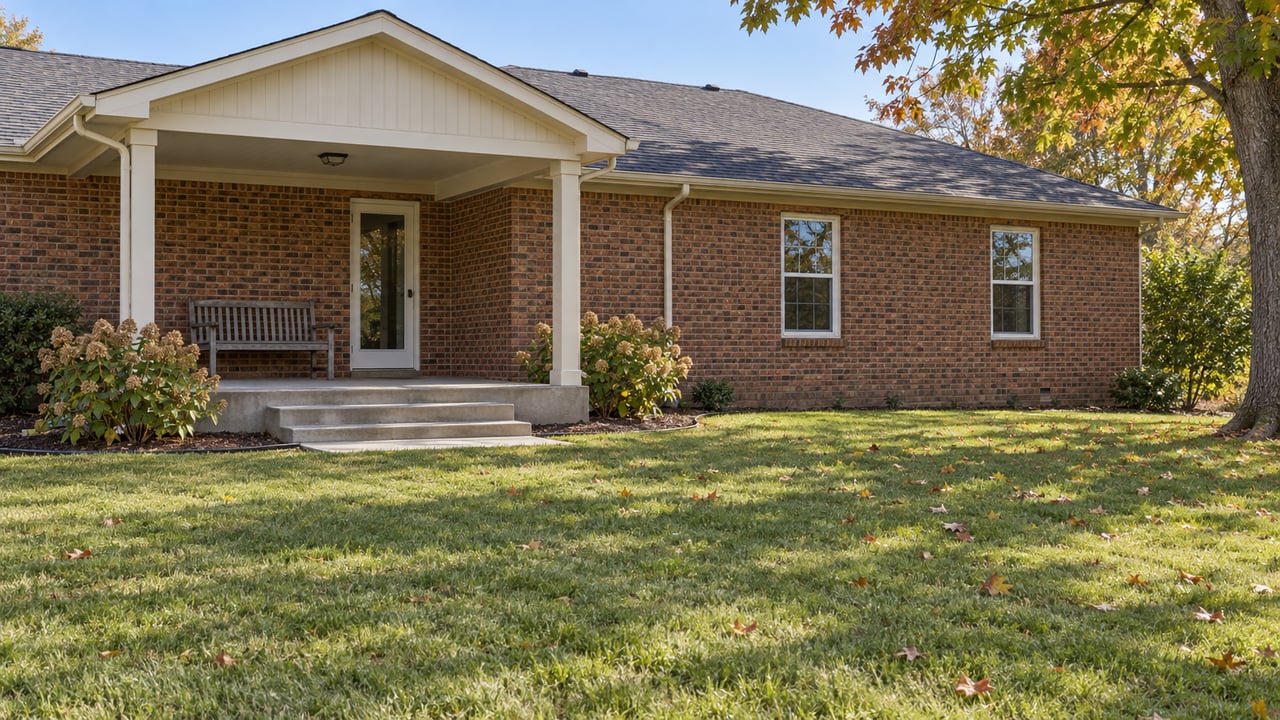
When a brick ranch on a few acres outside Brownsville goes under contract, who actually looks at the septic system? Under Kentucky's onsite sewage rules, inspections by certified inspectors are tied to a system being installed, built, altered, or repaired. A sale is not one of those events. A septic system can change hands in Edmonson County with no one opening the tank, unless the buyer writes an inspection into the deal.
That shapes two kinds of transactions in different ways. On an existing home, the seller's disclosure form and the buyer's own inspection are what you have to go on. On raw land, nobody can inspect a system that doesn't exist yet. There, a state site evaluation decides whether the lot can take a standard system. In this county, sinkholes and shallow soil often decide that before price comes into it.
Most residential sellers in Kentucky complete KREC Form 402, the Seller's Disclosure of Property Condition, which the Kentucky Real Estate Commission posts on its official forms page. Section 8 covers the sewer system. It asks the seller to mark which of seven categories serves the property:
For Categories IV, V, and VI, the aerobic and septic systems, the form goes further. It asks for the servicer's name, the date of the last inspection, the date the septic tank was last cleaned, and whether the seller knows of any problems.
Those dates are the most useful lines on the page. The form records what the seller knows. It doesn't require that anything was ever done. Blank dates or an "unknown" answer tell a buyer that nobody has documented the system recently, and the purchase contract is the place to deal with that.
The University of Kentucky Cooperative Extension's guidance on conventional systems gives a pumping range of every three to six years, depending on water use. For a 1,000-gallon tank, it puts that at about three years for a household of four or more and six years for a two-person household. Set beside that range, a "date last cleaned" that's a decade old tells you more than any listing photo will. The same leaflet warns never to inspect a tank alone and never to go inside one.
When an existing system needs a formal look, the Barren River District Health Department, which serves Edmonson County, links an existing-system application, Form DFS-326. The owner signs an affidavit, and a certified inspector reports whether the system works and whether there are past complaint or investigation records. It's a request someone files on purpose. A sale doesn't trigger it.
A buyer looking at a wooded tract off a county road is in a different spot. There's no system to inspect, so the question is whether one can be permitted, and what kind.
Under 902 KAR 10:085, a certified inspector or a professional engineer evaluates every proposed site and classifies each factor as suitable, provisionally suitable, or unsuitable. In a subdivision, each lot is evaluated on its own. Two parts of that evaluation matter most in Edmonson County.
The first is how close the system would sit to a sinkhole. Any area closer than 70 feet to an open sinkhole throat, or downslope from the midpoint of a sinkhole's side slope, is classified unsuitable. On a hilly tract with a sinkhole near the best building spot, that rule can push the drain field somewhere else, and sometimes the house goes with it.
The second is how much soil sits above rock or another restrictive layer.
| Soil depth at the proposed site | Classification under 902 KAR 10:085 | What it can mean for the build |
|---|---|---|
| 42 inches or more | Suitable | A conventional system is on the table |
| 24 to under 42 inches | Provisionally suitable | A shallower modified conventional trench or another approved system with 18 inches of separation from rock, or 12 to 18 inches with added treatment technology |
| 18 to under 24 inches | Unsuitable as to depth, though it can be reclassified provisionally suitable if the design leaves 18 inches of undisturbed natural soil below the lateral field | A mound system, another approved system that keeps 18 inches of separation, or filling with suitable soil and a one-year settling period |
| Under 18 inches | Unsuitable as to depth | Filling with suitable soil, a one-year settling period, then a modified or alternative system that keeps 18 inches of separation |
Two parcels with the same acreage and the same asking price can land in different rows of that table. One gets a standard tank and field. The other needs an engineered approach that changes the cost and the timeline of the build. Sale prices for land don't show that difference, but the site evaluation does.
The Kentucky Geological Survey's Edmonson County land-use notes describe sinkholes as common across the county's limestone bedrock. They add that in the southern and eastern parts of the county, underground karst channels can carry stormwater across the boundaries of surface watersheds. Those same notes say a home septic system should work properly and shouldn't send sewage into a crevice or hole.
Mammoth Cave National Park explains the stakes in its hydrology overview. In this karst area, sewage and other contaminants can move quickly into sinkholes and groundwater. The 70-foot setback and the soil-depth tiers exist because of that geology. Around Brownsville and toward the park, a sinkhole near the house site is a common feature of rural land.
For a new system, the state process runs in order: an application with a site plan, then the site evaluation and classification, then a separate construction permit before any work starts. A construction permit expires after one year unless it's extended. The state charges a $50 construction permit fee, plus a fee set by the local board of health.
In a land deal, that order is the friction. A buyer who closes first and orders the evaluation afterward finds out which row of the soil table they're in after the money is spent. The one-year permit window also matters for anyone who buys now and plans to build later. For current local fees and timing, call the Barren River District Health Department's onsite sewage program. It lists an Edmonson and Warren County contact at 270-597-2194, extension 302.
Some homes in town are on public sewer, and part of that system is changing hands. In a joint application filed with the Kentucky Public Service Commission on May 28, 2026, the Edmonson County Water District said it still provides sewer service to about 57 residential customers in the Hilltop area, in the northern part of Brownsville's city limits. The water district and Caveland Environmental Authority signed a statement of intent on January 27, 2026, for Caveland to buy that system. Under an operating agreement signed the same day, Caveland began managing, operating, and maintaining it on or about March 2, 2026. The filing says Caveland owns and operates the Brownsville wastewater treatment plant that treats Hilltop's sewage.
The transfer is still in front of regulators. The PSC's September 2, 2026 procedural order sets December 11, 2026 as the deadline to request a public hearing or a decision on the written record. A Hilltop property that sells this fall may close while the system is run by one entity and still owned by another. For the disclosure, that means the "name of servicer" line is worth confirming as of the closing date.
This follows an earlier change. Edmonson Voice reported that billing and collection for Brownsville's water and sewer moved to Caveland effective July 1, 2025. A city address with a Caveland bill could still be on a private system, so check which category on Form 402 applies to the specific property.
Does the health department inspect a septic system when a house sells? Kentucky's onsite sewage regulation ties certified inspections to installing, building, altering, or repairing a system, and it doesn't list a sale as a trigger. An inspection at sale usually happens because the buyer's contract calls for one.
Can a sinkhole on the property stop a build? It can rule out the area around it. Ground within 70 feet of an open sinkhole throat, or downslope from the midpoint of its side slope, is classified unsuitable for a system. Whether the rest of the parcel works depends on the site evaluation.
What does "provisionally suitable" mean for a buyer? For soil depth, it means at least 24 but less than 42 inches of soil. A system may still be approved there as a shallower modified conventional trench or another approved design, and closer separation from rock may be considered with added treatment technology. Mounds and fill-and-wait designs apply to shallower soil than that.
This post is general information, not legal or financial advice. Please confirm the requirements for your property with the Barren River District Health Department and the right licensed professionals before you sign.
If you're weighing a tract with a sinkhole near the house site or listing a home whose septic dates are blank on Form 402, Shauna Gravil can help you build the evaluation and inspection into your contract timeline so you know what's in the ground before closing. Schedule a free consultation.
Stay up to date on the latest real estate trends.

Experience personalized service, expert negotiation, and a commitment to achieving your real estate goals.