Buying Rural Property Near Mammoth Cave: Key Considerations
July 2, 2026
July 2, 2026
Wondering if that beautiful piece of land near Mammoth Cave is as simple to buy as it looks? Rural property can offer privacy, space, and a slower pace, but it also comes with details you do not want to discover after closing. If you are thinking about buying acreage or a country home in the Mammoth Cave area, this guide will help you focus on the practical issues that matter most before you move forward. Let’s dive in.
The Mammoth Cave area sits in a karst landscape, which means the land is shaped by limestone, caves, sinkholes, sinking streams, and underground drainage. Mammoth Cave National Park is recognized for these features, and groundwater in this area can travel more than 7 miles from sinkhole plain to springs.
For you as a buyer, that means the surface of a property does not always tell the whole story. A tract that looks dry during one visit may handle water very differently after heavy rain, so drainage, grading, runoff, and low spots deserve close attention.
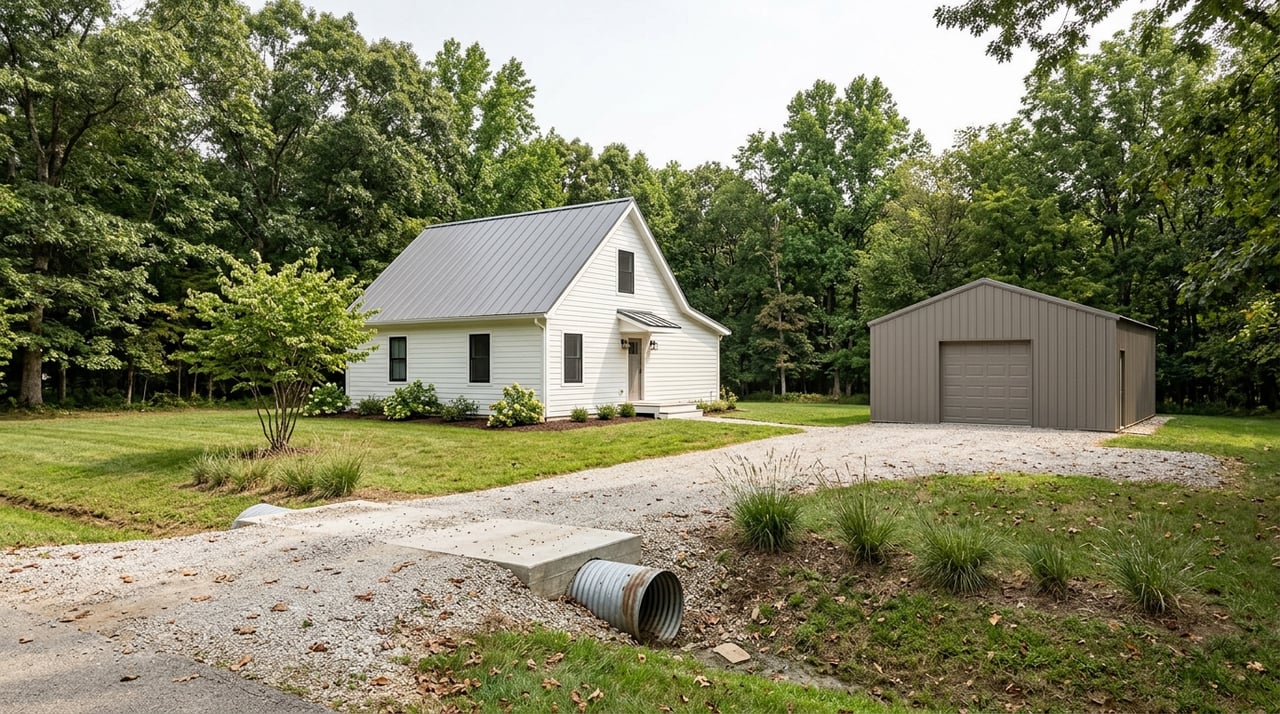
One of the first questions to ask is simple: Can you legally and practically get to the property? Rural listings can include road frontage, shared access, easements, or entrances that need additional review.
If the property connects to a state highway, the Kentucky Transportation Cabinet requires a permit for access to the state highway system. Driveway and entrance standards can apply, and for a farm or single-family driveway entrance, the owner generally applies for the permit and usually maintains the entrance approach.
If the road is county-maintained, that is a separate issue. Edmonson County’s Fiscal Court oversees county road construction, operation, and maintenance, so it is smart to ask the county road department about maintenance before assuming grading, culvert work, or other road service will be handled publicly.
Access is not just about whether you can drive to the property today. It is also about what the deed and plat say about legal access, shared driveways, boundary lines, and easements.
The Edmonson County Clerk’s records are a key source for this. Public legal records, including deeds and plats, can help confirm boundary history, deed restrictions, and access language before you commit.
Rural property near Mammoth Cave does not always come with the same utility setup from one parcel to the next. Two neighboring properties may have very different options for water, gas, internet, or sewer.
Edmonson County utility resources list Warren Rural Electric Cooperative for electric service, Edmonson County Water District for water, Leitchfield Utilities for natural gas, and internet providers that include NCTC, Mediacom, SCRTC, and Windstream. Water service can also vary by area, with Caveland Environmental Authority serving Cave City, Park City, and Mammoth Cave.
Before you buy, ask what is already connected, what is available at the road, and what might need to be extended. That step can affect both your budget and your timeline.
A common mistake is thinking that more acreage automatically makes a property easier to build on. In reality, utility access, easements, setbacks, and site conditions can all reduce the part of the land that is truly usable.
Edmonson County subdivision regulations note that utility easements of at least 10 feet may be required along frontage lot lines for services like power, water, and sewer. That means the surveyed acreage may not reflect how much room you really have for a home site, driveway, parking, and future improvements.
If a property is not connected to sewer, septic should move near the top of your checklist. In Kentucky, an on-site sewage permit is required from the local health department before construction or alteration of the system.
For Edmonson County, the Barren River District Health Department handles onsite sewage evaluations and permits. This is important because septic feasibility is not something you should assume based on lot size alone.
Soil conditions, groundwater depth, and site layout can all affect whether a system will work. A property may look ideal on paper and still need a closer review before you count on building or expanding.
Some rural properties rely on private wells instead of public water. If that is the case, you will want to think beyond simply asking whether a well exists.
Kentucky recommends annual testing for private wells, and construction, modification, and abandonment work must be done by a Kentucky-certified water well driller. State well standards also require the driller to evaluate nearby land use and possible pollution sources, including septic systems, before construction.
Groundwater protection is especially important in this part of Kentucky. State guidance emphasizes protecting groundwater and surface water from contamination before problems start.
That makes site planning a big deal if you want space for animals, equipment, outbuildings, or a hobby-farm setup. Before you buy, think carefully about runoff, manure storage, chemical storage, and where a well or septic field could sit on the property.
Properties near the Green River, Nolin River, or lower-lying ground can come with added floodplain and drainage questions. In a karst area, water movement can be less obvious than it appears from a quick showing.
Kentucky’s Division of Water maintains flood maps, and development in, along, or across a stream can require a floodplain permit. If you are considering land near streams, rivers, sinkholes, or low spots, it is worth reviewing flood-related concerns before closing.
Edmonson County subdivision regulations allow the planning commission to disapprove lots on land subject to flooding, subsidence, or other hazards. That is one reason the total acreage in a listing should never be the only number guiding your decision.
You want to know how much of the tract can realistically support your plans. A parcel may need room for a driveway, turnaround space, septic field, well, parking, and possible future structures, all without creating drainage or access issues.
When you are shopping for rural property, it is easy to focus on the number of acres first. But the shape, width, road frontage, and placement options can matter just as much.
Edmonson County regulations provide a useful benchmark. Lots must front on a public street or road for at least 100 feet, and in areas without zoning where public sewer is not available, lots must be at least 100 feet wide and no smaller than three-quarters of an acre.
For lots served by private wells, minimum width and area can depend on health officer review of soil conditions, sewage systems, and groundwater depth. In practical terms, that means a narrow or oddly shaped tract may not fit your goals as well as a smaller but better-laid-out parcel.
Rural property purchases usually involve more moving parts than a standard in-town home purchase. The earlier you verify the basics, the more confident your decision can be.
Depending on the property, you may want help from a surveyor or title professional for boundaries and easements, the Barren River District Health Department for septic questions, a Kentucky-certified well driller for private water planning, and KYTC or the Edmonson County Road Department for access questions. If floodplain concerns come up, the Division of Water or a local floodplain coordinator may also be part of the conversation.
Before you make an offer on rural property near Mammoth Cave, try to confirm these points:
Buying in the Mammoth Cave area can be incredibly rewarding when the property fits both your lifestyle and the land itself. With the right questions upfront, you can avoid surprises and choose a tract that works well for how you actually want to live.
If you are looking for a country home, small acreage, or land near Mammoth Cave, working with someone who understands the local market can make the process a lot smoother. When you are ready to talk through your options, connect with Shauna Gravil for practical guidance rooted in local experience.
Stay up to date on the latest real estate trends.
Experience personalized service, expert negotiation, and a commitment to achieving your real estate goals.